All major parks listed in this guide have been assessed for accessibility by the Sunny Breakfast Spot editorial team. Accessibility features are subject to change — please contact individual parks before travel to confirm current arrangements.
Japan's Commitment to Inclusive Outdoor Spaces
Japan has made significant investments in making its public parks and green spaces welcoming to visitors of all abilities. Guided by both national legislation and a cultural commitment to omotenashi — the art of wholehearted hospitality — park management across the country has progressively improved accessibility infrastructure over the past two decades.
The Basic Act for Persons with Disabilities (2011) and the Act for Eliminating Discrimination against Persons with Disabilities (2016) have established strong legal frameworks. The preparation for the Tokyo 2020 Olympic and Paralympic Games accelerated a major round of accessibility improvements at parks throughout the Kanto region.
Today, Japan's major urban parks compare favourably with the best accessible green spaces anywhere in the world, with well-maintained paved paths, universally designed facilities, and a culture of attentive staff assistance that makes visitors feel genuinely welcomed.
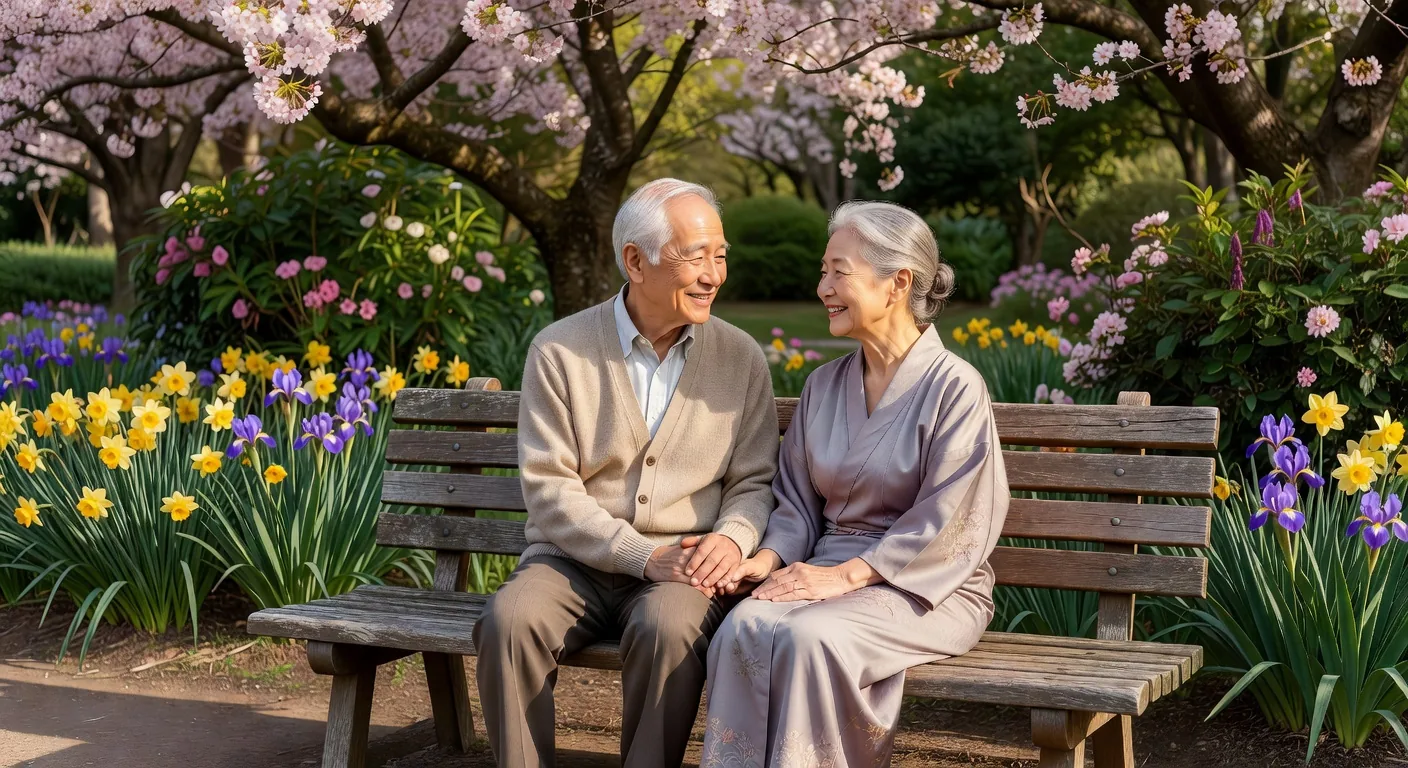
Japan's parks offer peaceful resting spots, shaded seating, and warm hospitality for visitors of all ages.
Accessibility Features in Japanese Parks
Japan's major public parks typically offer a comprehensive range of accessibility features. The following outlines what you can expect at well-rated parks.

Paved Pathways and Level Routes
Most major parks maintain extensive networks of smooth, paved pathways suitable for wheelchairs, pushchairs, and mobility aids. Tactile guidance blocks (tenji burokku) — rows of yellow textured tiles — guide visually impaired visitors along key routes.

Wheelchair-Accessible Facilities
Entrance gates, ticket offices, rest pavilions, and refreshment areas at major parks are designed to wheelchair standards. Smooth ramps replace steps where possible; elevator lifts are provided where level access cannot be achieved.

Accessible Restrooms
Japan's famous attention to restroom quality extends to accessibility. Most urban parks include at least one accessible toilet cubicle equipped with grab rails, emergency call buttons, and space for wheelchair transfer. Ostomate-compatible facilities are available at several major parks.

Rest Benches and Sheltered Seating
Frequent seating — typically every 100–200 metres along main paths — allows visitors to rest at regular intervals. Many seating areas are sheltered by pergolas or tree canopy for comfort in all weather. Some parks offer wheelchair transfer seats and wider benches.
Braille Signage and Audio Guides
Parks managed by metropolitan authorities typically provide Braille versions of park maps at information centres. Audio guide services (available via smartphone QR code at many parks) offer multilingual commentary for key garden features.
Staff Assistance Services
Trained park staff at information centres can provide assistance with routing, wheelchair loan, and guidance to accessible facilities. At major parks, staff members are trained in basic sign language communication. Pre-booked escort services are available at several parks through the park management office.
Family-Friendly Parks
Japan's public parks are exceptionally well-suited to families with young children. The combination of wide open lawns, safe water features, dedicated play equipment, and clean, well-maintained facilities makes park visits a staple of Japanese family life across all seasons.
Most major parks include dedicated children's play areas with age-appropriate equipment, splash zones active in summer months, and shaded rest areas with picnic facilities. Nursing rooms (for breastfeeding and nappy changing) are available at many park centres and restroom facilities.
Pushchair access is generally excellent on main pathways, though some traditional garden areas with stepping stone paths may require alternative routing. Park staff are always happy to advise on the most pushchair-friendly routes on arrival.
Water fountains, park-side vending machines, and kiosk refreshments make extended family visits practical without carrying excessive supplies. Many parks also host children's workshops, seasonal craft activities, and nature education programmes — check park websites or information centres for current schedules.
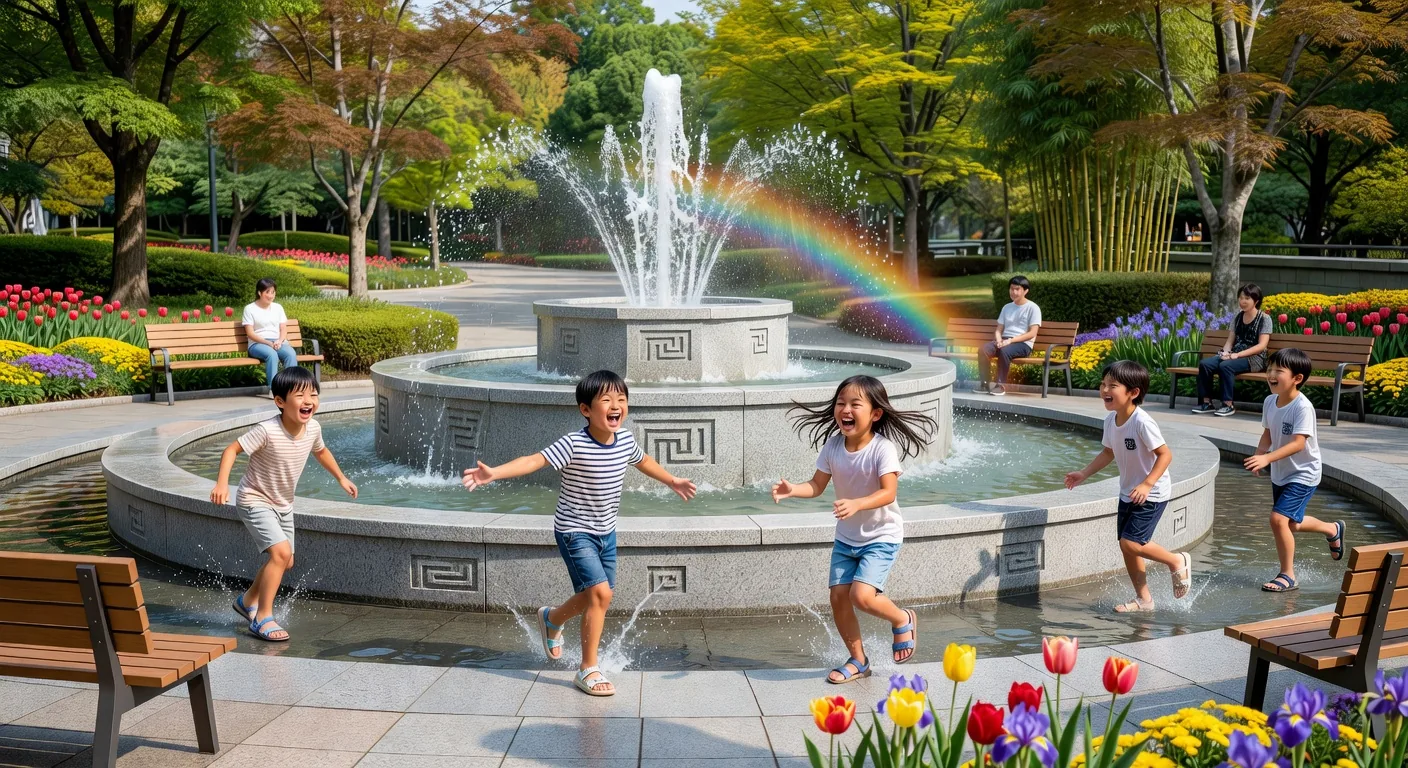
Water play fountains and splash pads are a beloved feature of Japan's family-friendly parks in summer.
Parks Rated for Accessibility
The following table provides an overview of the accessibility features available at five of Tokyo's most visited parks. Ratings are out of five dots across three categories: mobility access, sensory accessibility, and family facilities.
| Park | Mobility Access | Sensory Access | Family Facilities | Wheelchair Loan | Accessible WC | Staff Assistance | Entry Fee |
|---|---|---|---|---|---|---|---|
| Shinjuku Gyoen Shinjuku, Tokyo |
Available | Multiple | Yes | ¥500 | |||
| Ueno Park Taito, Tokyo |
On Request | Multiple | Yes | Free | |||
| Korakuen Garden Bunkyo, Tokyo |
Available | Available | Limited | ¥300 | |||
| Hibiya Park Chiyoda, Tokyo |
On Request | Multiple | Yes | Free | |||
| Odaiba Seaside Park Minato, Tokyo |
Nearby Rental | Multiple | Limited | Free |
Understanding the Accessibility Rating Scale
Transport Access to Major Parks
Japan's urban transport network is among the most accessible in the world. All major train and subway stations serving the parks below have been equipped with lifts, wide ticket gates for wheelchairs, and staff assistance points. IC cards (Suica, Pasmo) can be used on all Tokyo train lines and eliminate the need for small-change transactions at ticket machines.
♿ Shinjuku Gyoen
- Shinjuku Station (JR, Metro): 10 min walk via accessible route
- Shinjuku-gyoenmae Station (Marunouchi Line): 3 min, fully level
- Sendagaya Station (Sobu Line): 5 min, one accessible exit
- Accessible entrance: Shinjuku Gate and Sendagaya Gate
♿ Ueno Park
- Ueno Station (JR, Ginza & Hibiya lines): directly adjacent
- Keisei Ueno Station: 5 min walk, accessible exit available
- All main park entrances are step-free
- Accessible parking available at Ueno Zoo entrance
♿ Hibiya Park
- Hibiya Station (Hibiya, Chiyoda, Mita lines): direct accessible exit
- Kasumigaseki Station (Marunouchi, Hibiya, Chiyoda): 5 min
- Step-free access from all main entrances
- Accessible parking: Hibiya Parking adjacent
♿ Odaiba Seaside Park
- Daiba Station (Yurikamome): 3 min, full accessibility
- Telecom Centre Station (Yurikamome): 5 min
- Tokyo Waterfront City Bus: accessible low-floor buses
- Wide, flat promenade throughout — exceptional mobility access
♿ Korakuen Garden
- Korakuen Station (Marunouchi & Namboku lines): 3 min walk
- Iidabashi Station (Sobu, Namboku, Yurakucho, Tozai): 10 min
- Accessible entrance at main gate only
- Note: garden interior has some gravel sections
🚌 Accessible Bus Services
- Tokyo metropolitan buses: 100% low-floor accessible fleet
- Community buses serve all major park areas
- Wheelchair securing positions on all metropolitan buses
- Priority seating and audio-visual announcements on all services
Visitor Tips by Group
Tips for Visiting with Elderly Family Members
- Plan a route in advance using park accessibility maps — available at main entrances and online
- Visit on weekday mornings for the quietest conditions and easiest access to seating
- Identify rest bench locations before setting off — Japan's parks are generously equipped with seating
- Carry a small folding stool for additional rest flexibility on longer routes
- Many parks offer wheelchair loans free of charge — enquire at the information centre on arrival
- Shaded routes are clearly marked on most park maps; prioritise these in summer
- Check if the park has a restaurant or tea house — a proper rest with refreshments mid-visit is often helpful
- Inform park staff of any specific needs on arrival; Japanese park staff are highly attentive and proactive
- Consider visiting during special elderly discount days — many parks offer reduced or free admission for seniors
Tips for Visiting with Young Children
- Bring a pushchair — paved main paths at major parks are smooth and pushchair-friendly
- Most parks have a dedicated children's play area — locate this first to anchor your visit
- Water play fountains operate seasonally (July–September) at many parks — check in advance
- Shade is limited in open lawn areas; bring hats, sunscreen, and cooling towels in summer
- Nursing rooms are available at main park centres and some large restroom facilities
- Pack more drinks than you expect to need — children tire quickly in Japan's summer heat
- Many parks offer seasonal children's events — spring craft activities, summer insect hunts, autumn leaf printing
- Picnic on the grass lawns rather than at tables — children have more freedom and space
- Keep close to children near ponds and water features — safety barriers are limited at traditional gardens
Tips for Visitors with Disabilities
- Contact the park management office in advance to discuss specific needs and arrange assistance
- Request accessible route maps — these are separate from standard maps and detail gradient changes and surface types
- Tactile guidance blocks (yellow tenji tiles) follow main routes; follow these for the most obstacle-free paths
- Companion care dogs (service dogs) are permitted in all national and metropolitan parks
- Wheelchair loan services are typically free — book in advance during peak season (cherry blossom, autumn)
- IC card top-ups can be done at accessible machines at train stations — avoid ticket queues
- Some parks offer specialist guided tours for visitors with visual or hearing impairment — enquire at information centres
- The Japan Tourism Agency's "Accessible Japan" app provides detailed venue-by-venue accessibility ratings
- Portable induction loop devices for hearing aid users may be available at major parks' information facilities
Apps and Digital Resources
A growing ecosystem of apps and online tools makes accessible park navigation easier than ever. The following resources are recommended for planning and navigation.
Navigation App
Google Maps (Wheelchair Mode)
Google Maps' "wheelchair-accessible" routing option shows step-free transit routes in Tokyo and other major cities. Set this in the route options before calculating directions from any station to a park entrance.
Accessibility Guide
Accessible Japan
The Accessible Japan platform (accessiblejapan.com) provides detailed, visitor-written reviews of accessibility at parks, temples, restaurants, and transport hubs across Japan, with photos and practical tips.
Transit App
Japan Official Travel App
Published by the Japan Tourism Agency, this app includes barrier-free transit search, tourist information in multiple languages, and downloadable offline maps for major park areas.
Sensory Support
Tokyo Parks Audio Guide
The Tokyo Metropolitan Park Association provides QR code-accessible audio guides at key garden features within their managed parks. Scan at information boards to launch audio commentary in Japanese and English.
Real-Time Information
Tokyo Metro App
The Tokyo Metro app's station navigator shows the precise location of lifts, accessible ticket gates, and accessible toilet facilities at every station — essential for planning accessible journeys to park destinations.
Translation Aid
Google Translate (Camera Mode)
Use camera translation to instantly render Japanese signage — including park rules, accessibility notices, and route directions — into your preferred language. Offline translation packs are available for use without data.
Contact Us for Special Assistance
If you have specific accessibility requirements that are not covered by this guide, or if you would like personal assistance planning an accessible park visit, our Visitor Support team is here to help. We can provide customised route guidance, recommend specific parks based on mobility level, and connect you with park management for pre-arranged assistance services.
We aim to respond to all accessibility enquiries within one business day. For urgent requests, please use the phone number provided at individual park information centres.
You can also reach us directly at info@sunnybreakfastspot.com with the subject line "Accessibility Enquiry."