Japan's Living Landscape

Japan's parks and protected areas shelter one of Asia's most diverse collections of flora and fauna. From the sub-tropical forests of Yakushima to the alpine meadows of the Japanese Alps, the country's varied terrain — combined with centuries of cultural reverence for the natural world — has preserved habitats of extraordinary richness. Across more than 34 national parks and thousands of municipal green spaces, visitors can encounter ancient ecosystems that have endured alongside human civilization for millennia.

Whether you are a dedicated naturalist or simply a curious traveller pausing beside a garden pond, Japan's parks offer intimate encounters with nature at every turn. This guide introduces the most remarkable flora and fauna you may encounter and explains how to seek them out responsibly.

Remarkable Plant Life

Japan's botanical heritage reflects thousands of years of both wild growth and careful human cultivation. The parks contain species ranging from the ancient and primordial to the delicately ornamental.

🪷

Lotus (Hasu)

Sacred Waters

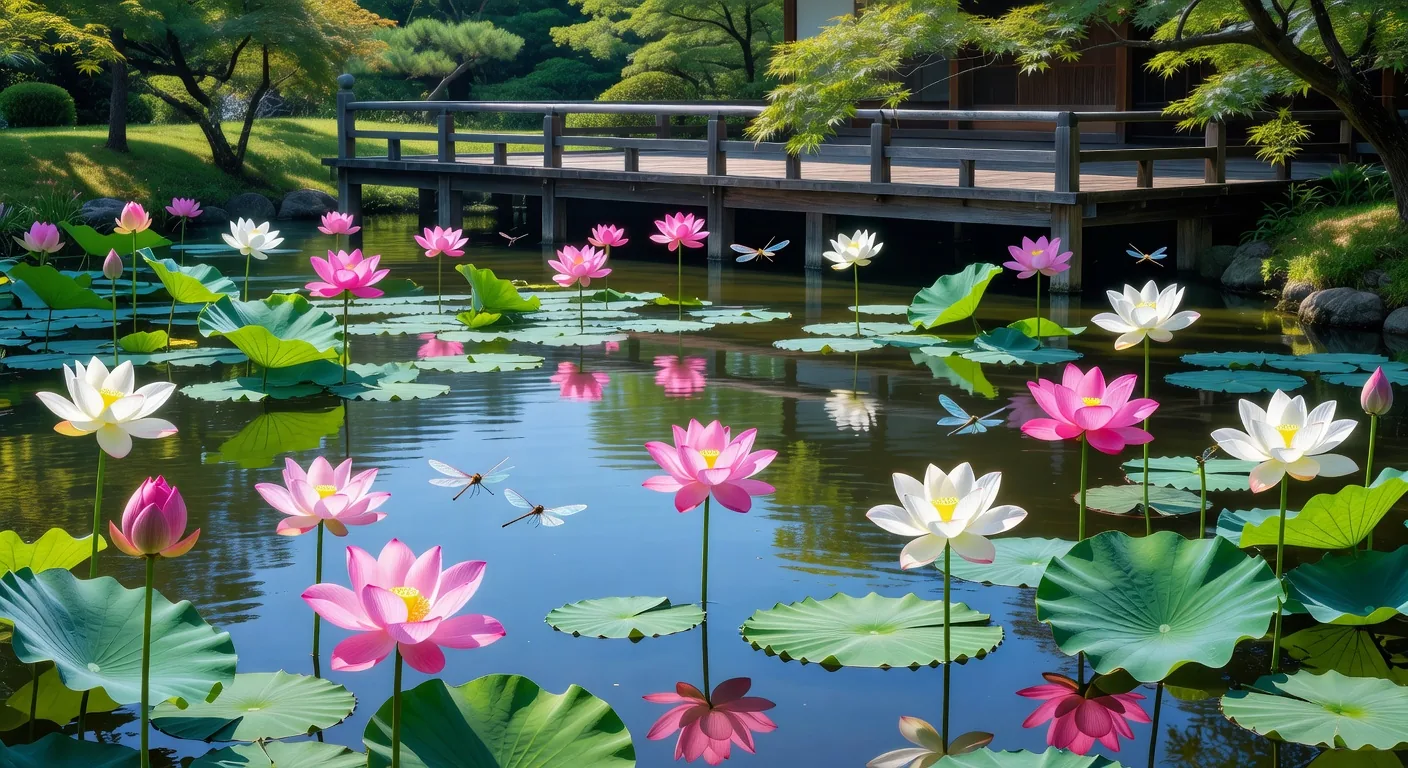
The lotus holds deep spiritual significance in Japanese Buddhism, symbolising purity emerging from muddy waters. Shinobazu Pond in Ueno Park (Tokyo) is one of the finest places to witness great lotus beds in full flower. Blooms open in the cool of early morning, typically between 6:00 and 9:00 am, closing again as the heat builds. Peak season runs from mid-July through August. Visitors are rewarded with pink and white flowers rising serenely above broad, rain-beaded leaves. Guided early-morning walks are offered by the park authority in late July.

🌿

Moss Gardens

Ancient Ecosystems

Kyoto's moss gardens represent some of the world's most sophisticated plant environments. Saihō-ji (Kokedera, the Moss Temple) maintains over 120 species of moss across its grounds — a living carpet that shifts from bright lime-green in rain to deep emerald in sunlight. Moss thrives in the humid, sheltered microclimates of temple gardens, blanketing stone lanterns, ancient walls, and the earth itself. The moss ecosystems here are hundreds of years old; visitors walk carefully along designated paths to preserve their integrity. Entry to Saihō-ji requires advance reservation and a modest donation.

🎋

Bamboo Forests

Living Architecture

Japan is home to over 600 species of bamboo, and the country's forests of giant moso bamboo (Phyllostachys edulis) rank among the world's most visually spectacular plant communities. Arashiyama Bamboo Grove in western Kyoto draws visitors from around the globe to walk its hushed corridors of towering green culms. The adjacent Sagano area extends this experience into quieter, less-visited groves. Bamboo grows with remarkable speed — up to 90 cm per day during the spring growth season — and the hollow canes make a distinctive, haunting sound when wind passes through them. The forests are best experienced at dawn before tour groups arrive.

🏔️

Alpine Flora

Mountain Wildflowers

Japan's mountain parks, particularly the Japanese Alps and the highlands of Hokkaido, host an array of alpine wildflowers that bloom with spectacular brevity in the brief highland summer. Nikko Kirifuri Highlands fills with gentians, primroses, and lilies from June to August. In Daisetsuzan National Park (Hokkaido), the world's largest concentration of indigenous alpine plants includes the delicate Yezo gentian and cushion plants adapted to volcanic soils. Guided botanical walks are available from visitor centres in major mountain parks throughout summer.

Wildlife in Japanese Parks

Japan's parks shelter a surprising diversity of animal life, from the tame and famous to the rare and elusive. Here are the most remarkable species you may encounter on a visit.

🦌

Sika Deer (Shika)

Approximately 1,200 sika deer roam freely through Nara Park, considered sacred messengers of the Shinto god Takemikazuchi-no-mikoto. Visitors may purchase shika senbei (deer crackers) from vendors and feed the deer by hand. The deer have learned to bow in expectation of food, a behaviour that delights visitors. The annual deer antler cutting ceremony (Shika no Tsunokiri) takes place each October and is designated a National Important Intangible Folk Cultural Property.

🐒

Japanese Macaques (Snow Monkeys)

The Japanese macaque (Macaca fuscata) is the world's most northerly-living non-human primate, and the populations at Jigokudani Monkey Park in Nagano Prefecture have become famous globally for their habit of bathing in natural hot springs during winter. Troops of up to 60 individuals descend from the surrounding forest to soak in the steaming pools from November through March. Visitors walk a 2 km forest trail to reach the park, where the monkeys move freely around observing humans with calm indifference.

🐟

Koi & Goldfish

Ornamental koi (nishikigoi) are a quintessential element of Japan's traditional garden ponds. Introduced to garden culture during the Edo period, these colourful fish — bred in shades of white, red, black, orange, and gold — can live for 25–35 years and reach up to 90 cm in length. Major gardens including Kenroku-en (Kanazawa) and Kokedera maintain historic koi ponds. Many temples and parks also keep goldfish (kingyo) in dedicated ponds, particularly during summer Goldfish Festival displays.

🕊️

Herons, Egrets & Waterbirds

Japan's garden ponds and wetland parks host an impressive array of wading birds. The grey heron (aosagi) is a common sight standing motionless at pond edges from Hokkaido to Okinawa. Great and little egrets (shira-sagi) wade through shallow water in summer, their white plumage pristine against green backgrounds. Shinobazu Pond in Ueno Park hosts a significant breeding colony of night herons (goi-sagi). In Hokkaido, Kushiro Shitsugen wetlands support red-crowned cranes (tancho), a bird of profound cultural significance to the Japanese people.

Fireflies (Hotaru)

Few natural spectacles in Japan are as enchanting as a firefly display. Genji fireflies (Genji-hotaru) and Heike fireflies (Heike-hotaru) emerge in late May through July along clean, slow-flowing streams and rivers. The soft golden pulses of light drifting through darkened parkland have inspired Japanese poetry and painting for centuries. Prime locations for firefly viewing include the Mitake River in Okutama (western Tokyo), Kibune in Kyoto, and Yatsu-Higata wetlands in Chiba. Fireflies are sensitive indicators of water quality — their presence signals clean, healthy waterways.

🦌

Japanese Serow (Kamoshika)

The Japanese serow (Capricornis crispus) is a goat-antelope unique to Japan and a designated Special Natural Monument. This solitary, stocky animal inhabits the steep, forested mountains of Honshu, Shikoku, and Kyushu, where it grazes on leaves, shoots, and grasses in national parks such as Nikko, Chichibu-Tama-Kai, and the Minami Alps. Serow are most often spotted at dawn and dusk on forest edges. Their patient, contemplative temperament has made them beloved symbols of mountain Japan.

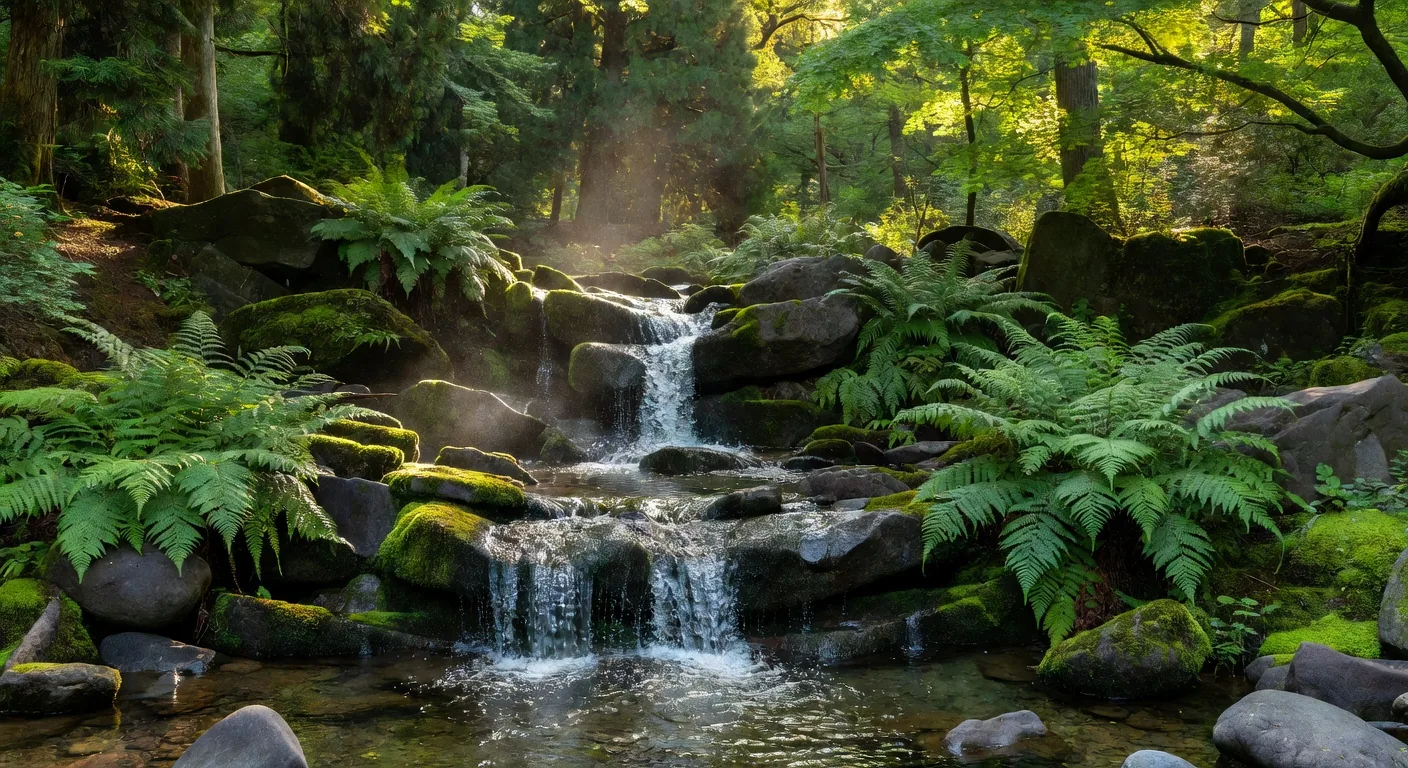
A small waterfall cascading over mossy rocks in a Japanese park stream

Water Ecosystems

Japan's extraordinarily diverse hydrological landscape — from glacier-fed alpine streams to tidal wetlands — underpins much of its ecological richness. Streams, rivers, ponds, and wetlands thread through public parks both urban and remote, creating corridors for wildlife and sites of immense natural beauty.

Fast-flowing mountain streams in parks such as Nikko and Chichibu-Tama-Kai support populations of Japanese giant salamander (Ōsanshōuo) — the world's second-largest amphibian, reaching up to 1.5 metres in length. These ancient creatures, largely unchanged for 30 million years, require cold, clear, well-oxygenated water, making their presence a powerful indicator of pristine habitat.

Coastal wetlands, rice paddy margins, and the restored river corridors of Japan's urban parks similarly teem with frogs, dragonflies, terrapins, and dozens of aquatic invertebrate species that form the base of the food web supporting birds and mammals.

  • Alpine streams and waterfalls: Nikko, Akame Shijuhachi-taki (Mie)
  • Wetland parks: Kushiro Shitsugen, Yatsu-Higata, Watarase Yusuichi
  • Sacred ponds: Shinobazu Pond, Ōsaka's Sumiyoshi Grand Shrine ponds
  • Coastal habitats: Mangroves in Okinawa and Amami-Oshima
  • River park corridors: Tamagawa, Arakawa, Kamo River (Kyoto)
  • Volcanic lake ecosystems: Lake Mashu, Lake Toya (Hokkaido)
Conservation in Japanese Parks

Japan's Ministry of the Environment manages an extensive network of national parks under a philosophy of preserving biodiversity while enabling respectful public access. Ongoing conservation programmes include habitat restoration, invasive species management, and wildlife corridor development. Visitors are asked to stay on designated paths, carry out all litter, and refrain from feeding wild animals other than in designated areas such as Nara Park.

Visitor Guidelines

Birdwatching Guide

Japan lies along major East Asian–Australasian Flyway migration routes, making it a globally significant destination for birdwatchers. Resident species are joined by hundreds of migratory visitors each spring and autumn, swelling park bird lists dramatically.

Ueno Park, Tokyo

Year-round

Shinobazu Pond hosts a large waterbird colony including night herons, little grebes, and, in winter, visiting ducks such as tufted ducks and pochards. The forested areas shelter Japanese bush warblers and great spotted woodpeckers.

Kushiro Shitsugen, Hokkaido

Spring & Summer

Japan's largest wetland national park is prime habitat for the endangered red-crowned crane, white-tailed eagle, and Steller's sea eagle in winter. Common reed bunting and reed warblers breed in the extensive reedbeds.

Shinjuku Gyoen, Tokyo

All seasons

Surprisingly rich for an urban park, Shinjuku Gyoen regularly produces records of winter thrushes, dusky warblers, and Eurasian sparrowhawks. Japanese white-eye and varied tit are resident in the woodland areas year-round.

Isahaya Bay, Nagasaki

Autumn & Winter

Coastal tidal flats at Isahaya provide critical stopovers for millions of migrating shorebirds including great knot, bar-tailed godwit, and rare spoon-billed sandpiper during autumn passage.

Oze National Park, Gunma

Summer

High-altitude marshes and sub-alpine forest support Japanese paradise flycatcher, golden eagle, and mountain hawk-eagle. The park's remote location preserves populations of rare upland species increasingly scarce elsewhere.

Kyoto's Temple Forests

Spring Migration

Arashiyama, Fushimi Inari, and Nanzenji forests capture waves of migrating flycatchers, warblers, and cuckoos each spring. The varied habitats — bamboo, broadleaved deciduous, and dark cryptomeria groves — attract a remarkable diversity of passage species.

Best Parks for Wildlife Spotting

Plan your wildlife visit with this overview of Japan's top parks, their flagship species, and the best times to visit.

Park Location Flagship Species Best Season Notes
Nara Park Nara Sika deer Year-round Free entry; deer crackers sold at park
Jigokudani Monkey Park Nagano Japanese macaque December–March 2 km forest walk to hot spring area
Kushiro Shitsugen Hokkaido Red-crowned crane January–February Viewing platforms along elevated boardwalks
Ueno Park (Shinobazu Pond) Tokyo Waterbirds, lotus July–August / Winter Free; accessible by metro
Mitake River, Okutama Western Tokyo Fireflies, kingfisher June Firefly viewing from riverside paths at dusk
Nikko National Park Tochigi/Gunma Japanese serow, waterfalls May–October Large park; car or bus recommended
Yakushima Island Kagoshima Yaku deer, Yaku macaque April–June UNESCO World Heritage Site
Shinjuku Gyoen Tokyo Songbirds, seasonal gardens Year-round Modest entry fee; no alcohol permitted

Respectful Wildlife Interaction

Protecting Japan's natural heritage depends on every visitor making thoughtful choices. The following principles reflect both Japanese law and local park regulations.

Maintain Distance

Except in designated feeding areas such as Nara Park, do not approach, touch, or attempt to feed wild animals. Maintain at least 10 metres from larger wildlife such as serow, deer, and monkeys outside of managed zones. Use binoculars and telephoto lenses to observe without disturbing.

Stay on Marked Trails

Leaving designated paths damages fragile ground-nesting habitats, disturbs cryptic wildlife, and contributes to soil erosion on slopes. Many parks enforce trail restrictions, particularly in breeding seasons (March–July). Fines apply for off-trail trespass in national parks.

No Flash Photography

Flash photography disturbs nocturnal animals and can disorient birds at nest sites. Firefly viewing is particularly sensitive — even white-light torch beams interfere with mating signals. Attend organised firefly viewing events which provide red-filtered lights where necessary.

Leave No Trace

Carry all litter out of parks, including food scraps. Human food damages the health of wild animals and creates unnatural dependency, established to conflicts with park management. Many parks in Japan have no litter bins — bring a rubbish bag and take waste home.

Respect Quiet Hours

Dawn and dusk are prime wildlife activity periods. Keep voices low, avoid loud music, and silence mobile devices in wildlife-rich areas. Many parks request visitors to observe quiet periods near nesting colonies and wetland observation hides.

Understand Legal Protections

Many species in Japan's parks are protected under the Law for the Conservation of Endangered Species of Wild Fauna and Flora. Collecting plants, catching insects, trapping animals, or removing natural materials (including rocks, moss, and fallen leaves) without authorisation is prohibited and may incur significant fines.