A Country in Celebration

Japan's relationship with its parks is inseparable from its calendar of seasonal festivals. For centuries, the Japanese have gathered beneath flowering trees, beside moonlit ponds, and under canopies of coloured lanterns to mark nature's passages with food, music, ceremony, and quiet contemplation. These gatherings — from the vast Hanami parties of spring to the intimate firefly-watching evenings of early summer — are not mere tourist attractions but living expressions of a culture that finds meaning in the turning of seasons. This guide covers the major events you can experience in Japan's parks throughout the year, with practical advice on attending them.

Annual Events Calendar

Japan's park events follow a rhythm determined by nature — when blossoms open, leaves turn, or fireflies emerge, the festivals follow. Plan your visit around these highlights.

01
January
Winter

Hatsumode & New Year Shrines

Millions visit shrine parks for Hatsumode, the first shrine visit of the year. Parks surrounding major shrines — Meiji Jingu, Naritasan Shinshoji, Sumiyoshi Taisha — draw enormous crowds in the first three days of January. Snow festivals begin in Hokkaido, with the Sapporo Snow Festival preparations underway. Many gardens remain open for winter plum viewings as earliest ume begin to bud in warmer prefectures.

02
February
Late Winter

Plum Blossom Festivals & Sapporo Snow Festival

Japan's plum blossom (ume) season begins in February, heralding the arrival of spring weeks before cherry trees flower. Koishikawa Korakuen and Yushima Tenmangu Shrine in Tokyo, and Kitano Tenmangu in Kyoto, hold dedicated Ume Matsuri celebrations with vendors, traditional music, and guided garden tours. The Sapporo Snow Festival (Sapporo Yuki Matsuri) in Hokkaido draws two million visitors to marvel at enormous sculptural snow art in Odori Park — one of Japan's great winter spectacles.

03
March
Early Spring

Cherry Blossom Countdown & Doll Festivals

March builds anticipation as the Japan Meteorological Corporation issues its annual sakura front forecasts. Early-blooming varieties such as kawazu-zakura on the Izu Peninsula draw visitors from mid-February, while major parks begin preparations for Hanami season. Hinamatsuri (Doll Festival, March 3) sees temple and shrine precincts decorated with ornate doll displays. The spring equinox (Shunbun no Hi) brings temple visits and family gatherings in gardens throughout the country.

04
April
Spring Peak

Hanami Season & Golden Week Preparations

April is Japan's most celebrated outdoor month. Cherry blossoms typically peak in Tokyo during the last week of March through mid-April, moving northward through the country over six weeks. Parks fill with Hanami parties — picnics beneath blooming trees — from early morning, with friends and colleagues reserving prime spots from dawn. Iconic locations include Shinjuku Gyoen, Maruyama Park (Kyoto), and the Philosopher's Path. The last days of April bring Golden Week preparations as parks install temporary food stalls and event stages.

05
May
Late Spring

Golden Week, Kite Flying & Wisteria Festivals

Golden Week (late April through May 5) sees Japan's parks at maximum capacity. Koinobori carp streamers fly from poles in parks and riverbanks to celebrate Children's Day (Kodomo no Hi). Wisteria festivals are highlights of May: Ashikaga Flower Park (Tochigi) and Kawachi Fujien (Kitakyushu) draw huge crowds to experience tunnels of cascading purple and white wisteria. Tsutsujimatsuri (azalea festivals) also peak in early May, particularly at Nezu Shrine in Tokyo's Bunkyo district.

06
June
Early Summer

Hydrangea Festivals & Firefly Evenings

Hydrangea (ajisai) season transforms temple and shrine gardens into seas of blue, purple, and white. Meigetsu-in in Kamakura, known as the "Hydrangea Temple," draws long queues during its late-June bloom. Throughout June, parks along clean streams and rivers begin their firefly (hotaru) viewing events — guided evening walks with naturalists who explain the biology of these beloved insects. Firefly evenings at Kibune (Kyoto) and along the Mitake River are particularly atmospheric, beginning at dusk and lasting around two hours.

07
July
Summer

Tanabata, Fireworks & Lotus Viewing

Tanabata (the Star Festival, July 7) fills park precincts and shopping streets with colourful paper streamers. Sendai's Tanabata Matsuri, held August 6–8, is the grandest celebration in Japan. July also brings the summer fireworks (hanabi taikai) season, with riverside parks serving as prime viewing spots — Sumidagawa Hanabi Taikai in Tokyo is one of the largest. Lotus flowers (hasu) begin their brief morning blooming season at Shinobazu Pond, with lotus viewing mornings drawing early risers from mid-July through August.

08
August
Midsummer

Obon Lantern Festivals & Bon Odori

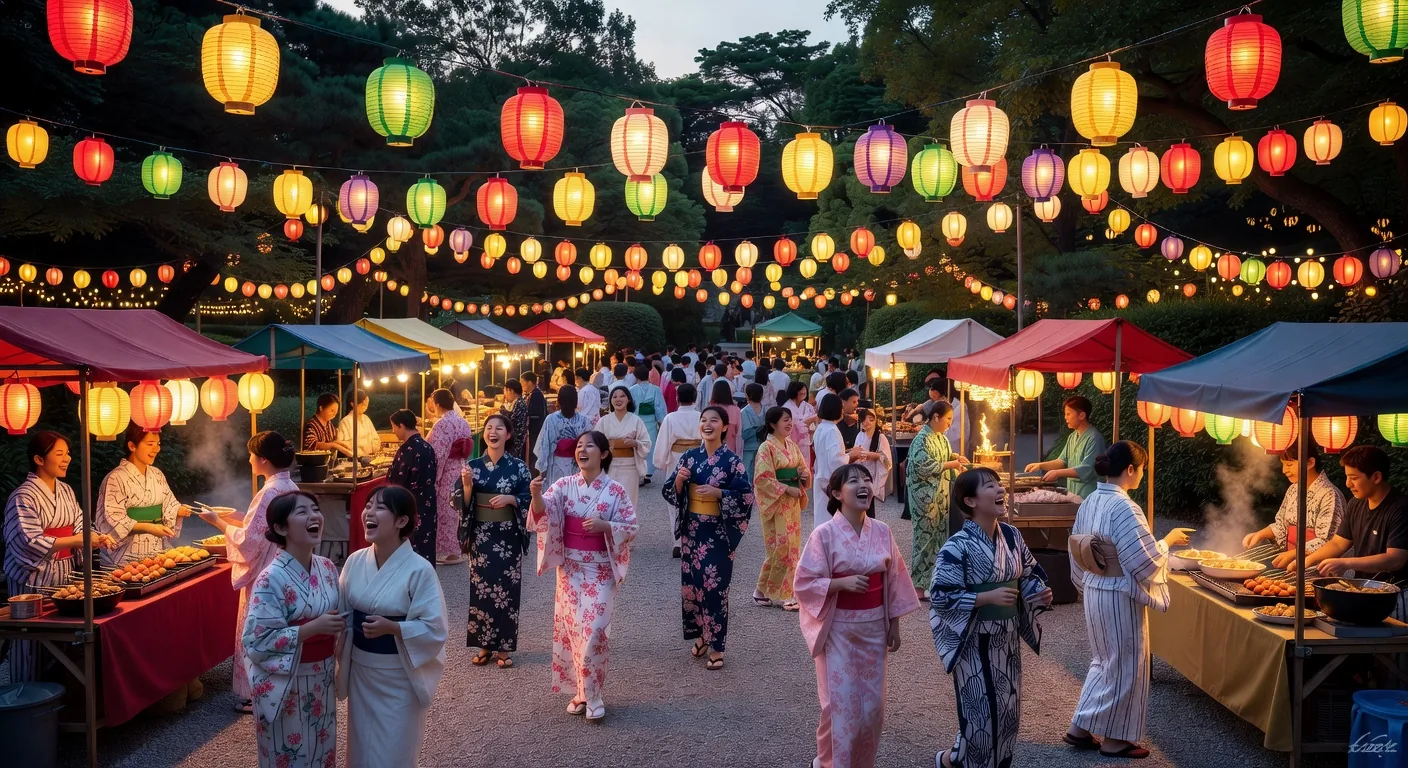
Obon (mid-August) is Japan's festival of ancestral spirits and one of its most visually beautiful celebrations. Toro Nagashi (floating lantern ceremonies) light up rivers and lakes across Japan as small paper lanterns drift downstream in tribute to departed ancestors. The Daimonji Gozan Okuribi in Kyoto (August 16) sees five giant bonfires lit on mountains surrounding the city, visible from parks throughout central Kyoto. Bon Odori folk dances take place in parks and temple precincts nationwide throughout August evenings.

09
September
Early Autumn

Chrysanthemum Shows & Moon Viewing

September's full moon (Jugoya) brings Tsukimi (moon viewing) events to parks and gardens, where offerings of rice dumplings (tsukimi dango) and autumn grasses are arranged for outdoor contemplation of the harvest moon. Chrysanthemum (kiku) exhibitions begin appearing in parks from late September, with immaculately trained blooms displayed in competitions at Shinjuku Gyoen and Hibiya Park. Silver grass (susuki) wave in autumnal breezes, and gardens begin the subtle shift toward autumn colour.

10
October
Autumn

Deer Antler Cutting & Early Foliage

October brings one of Nara's most celebrated annual ceremonies: Shika no Tsunokiri (deer antler cutting). Held in early October in the grounds of Kasugaokamura Shrine, traditional "deer cutters" (seko) in historical dress pursue and safely restrain the deer while priests ceremonially cut their antlers — a practice dating to the Edo period to prevent injury to visitors. Simultaneously, autumn foliage events begin in northern Hokkaido and mountain parks, with Daisetsuzan and Towada-Hachimantai turning spectacular shades from early October.

11
November
Peak Autumn

Koyo Peak & Chrysanthemum Exhibitions

November is Japan's second great viewing month after April's cherry blossom season. Koyo (autumn foliage) peaks in most of Honshu between late October and late November, with the colour front moving southward from the mountains. Kyoto's temple gardens — Eikan-do, Tofuku-ji, Kiyomizu-dera — hold special extended evening illuminations, allowing visitors to view the glowing maples after dark. Chrysanthemum exhibitions at major parks, including Shinjuku Gyoen's long-running November show, reach their height with elaborate displays of trained blooms.

12
December
Winter

Garden Illuminations & Winter Plum Viewings

December sees major parks and gardens transition to winter illumination events. Nabana no Sato (Mie Prefecture) and Ashikaga Flower Park are nationally famous for their winter light gardens, drawing millions over two months. Tokyo Midtown's Starlight Garden and smaller neighbourhood park illuminations create a warm atmosphere through the chill of December. The year's end brings year-end garden strolls and the first sightings of winter-blooming plum trees, closing the annual cycle before it begins again with January's New Year celebrations.

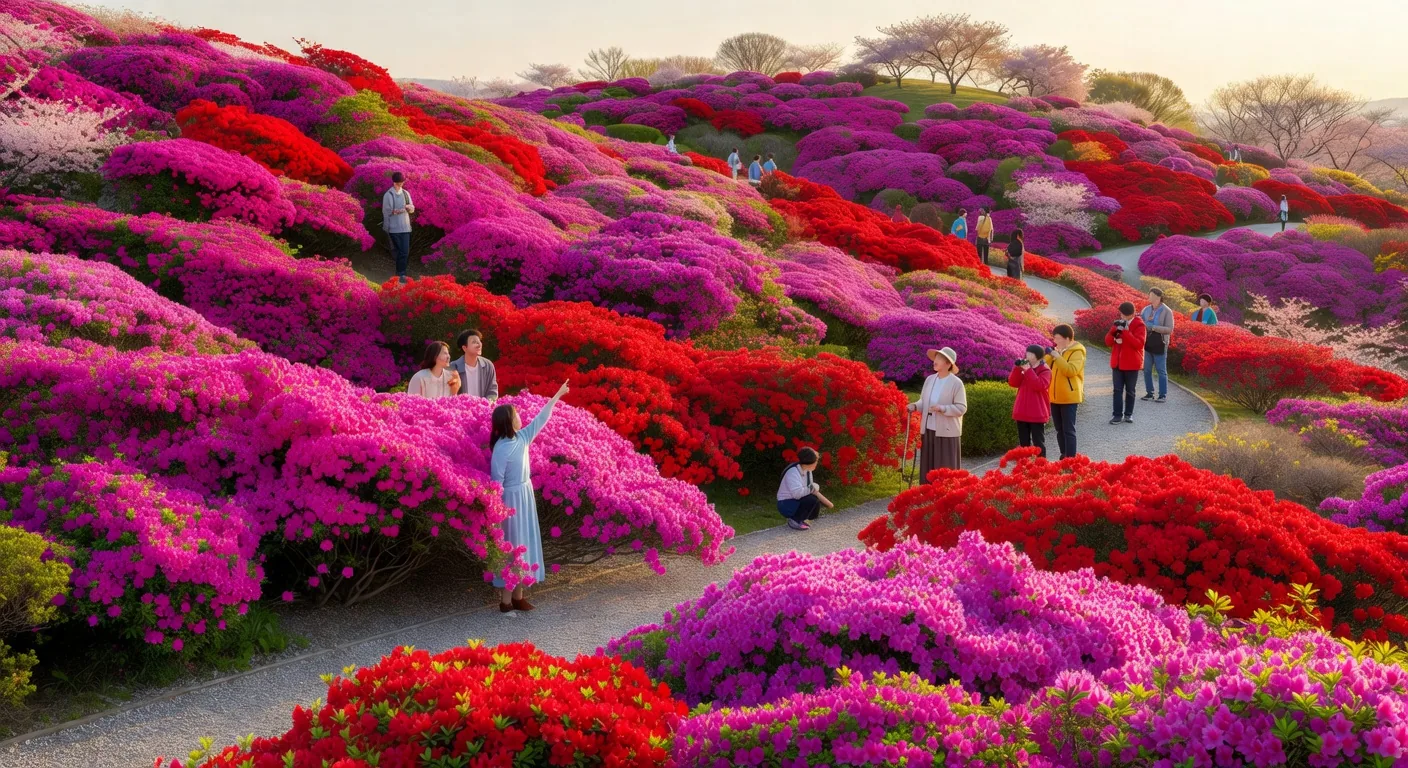
Vivid pink and purple azalea bushes in full bloom at Nezu Shrine, Tokyo
Featured Festival

Azalea Festival at Nezu Shrine

Each April and May, Nezu Shrine in Tokyo's Bunkyo district transforms into one of the city's most breathtaking floral landscapes. The shrine's azalea garden (Tsutsuji-en), which contains over 3,000 azalea bushes of approximately 100 varieties, has been tended for more than three centuries. When the azaleas peak — typically from late April through mid-May — the hillside is blanketed in shades of deepest crimson, magenta, hot pink, soft blush, and pure white.

The Nezu Shrine Azalea Festival (Otome Inari Tsutsujimatsuri) is one of Tokyo's most photogenic seasonal events. Wooden torii gates line a winding path through the hillside garden, framing views of the blooming azaleas against traditional shrine architecture. The festival draws tens of thousands of visitors during peak bloom, and a modest entry fee to the azalea garden supports ongoing shrine maintenance.

Early morning visits (gates open at 9:00 am) offer the best experience before crowds build. The adjacent shrine precinct and nearby Yanesen neighbourhood make for a full and rewarding half-day exploration.

  • Location: Nezu Shrine, 1-28-9 Nezu, Bunkyo City, Tokyo
  • Bloom period: Late April through mid-May (weather-dependent)
  • Azalea garden entry: Approx. ¥500 per adult
  • Shrine grounds entry: Free
  • Nearest station: Nezu (Chiyoda Line), 5 minutes walk
  • Best visiting time: Weekday mornings, 9:00–11:00 am
Three Essential Park Festivals

Among the hundreds of annual events across Japan's parks, these three stand apart for their cultural depth, natural beauty, and the intimate connection they foster between visitors and the landscape.

How to Find Local Park Events

Japan's park events are richly documented across multiple sources. Here are the most reliable ways to discover what is happening during your visit.

📱

Japan Official Travel App

The Japan Tourism Agency's official app consolidates events from prefectural tourism boards across Japan. Filter by date, location, and event type to find park festivals near your destination. Available in English, Chinese, and Korean.

🌐

JNTO Website

Japan National Tourism Organization (japan.travel) maintains a comprehensive English-language events calendar updated monthly. Particularly useful for seasonal nature events such as sakura and koyo forecasts, which are updated weekly during their respective seasons.

🏛️

Visitor Centres

Every major park operates a visitor centre or information booth where staff can provide current event schedules, maps, and seasonal highlight information. Many produce free English-language event leaflets for the current month. Tourist information centres at major train stations maintain similar resources.

📰

Local English Press

The Japan Times and Time Out Tokyo publish weekly event roundups including park festivals, nature events, and traditional ceremonies. The "What's On" sections are updated on Thursday for the coming week and cover events from free neighbourhood parks to major national celebrations.

🗺️

Prefecture Tourism Sites

Each prefecture maintains a tourism website with seasonal event listings for its parks and natural areas. Kyoto's official tourism site (kyoto.travel) is exemplary, providing real-time foliage and blossom status during peak seasons alongside full event schedules.

📅

Sunny Breakfast Spot Event Alerts

Register your email with Sunny Breakfast Spot to receive seasonal event newsletters before your trip. We compile events from public park authorities across the country and send tailored alerts based on your intended travel dates and destinations — free for all registered users.

Event Booking Tips

Book Accommodation Early

Hotels near major sakura parks and Kyoto's autumn foliage temples book out six to twelve months in advance for peak weeks. Check in dates around Golden Week (late April–early May) and mid-November in Kyoto require especially early reservations.

Arrive Before Opening

For popular events such as the Nezu Shrine Azalea Festival and Shinjuku Gyoen Hanami, queues begin forming 30–45 minutes before opening time on weekends. Weekday visits are significantly less crowded and more pleasant for photography.

Purchase Event Tickets Online

Special seasonal events — illuminations at Nabana no Sato, guided koyo walks at Tofuku-ji — often sell out entirely weeks before the event. Check official park websites in October and November for advance ticket availability.

Follow Official Forecast Updates

Cherry blossom and autumn foliage timing varies by up to three weeks from year to year depending on winter temperatures. Follow the Japan Meteorological Corporation's weekly forecast updates (available on JNTO's website) and be flexible with travel dates if possible.

Respect Event Rules

Many parks restrict alcohol consumption, ban pets, or require silence in specific areas during ceremonies and nature events. Firefly viewing evenings strictly prohibit torches and camera flash. Read event guidelines before attending and follow the instructions of park staff.

Consider Weekday Alternatives

Japan's most famous festival parks on peak weekends can hold crowds of tens of thousands. If your schedule allows, visiting the same park on a quiet weekday morning — even slightly off-peak bloom — often provides a more authentic and peaceful experience.